

Other views
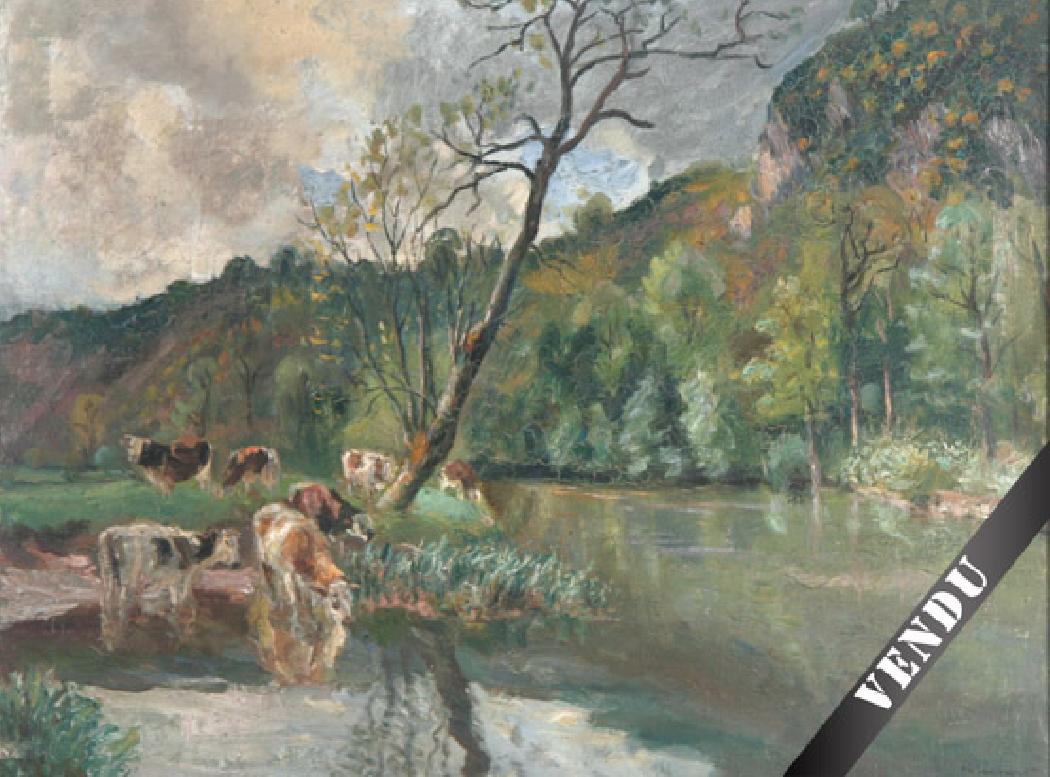
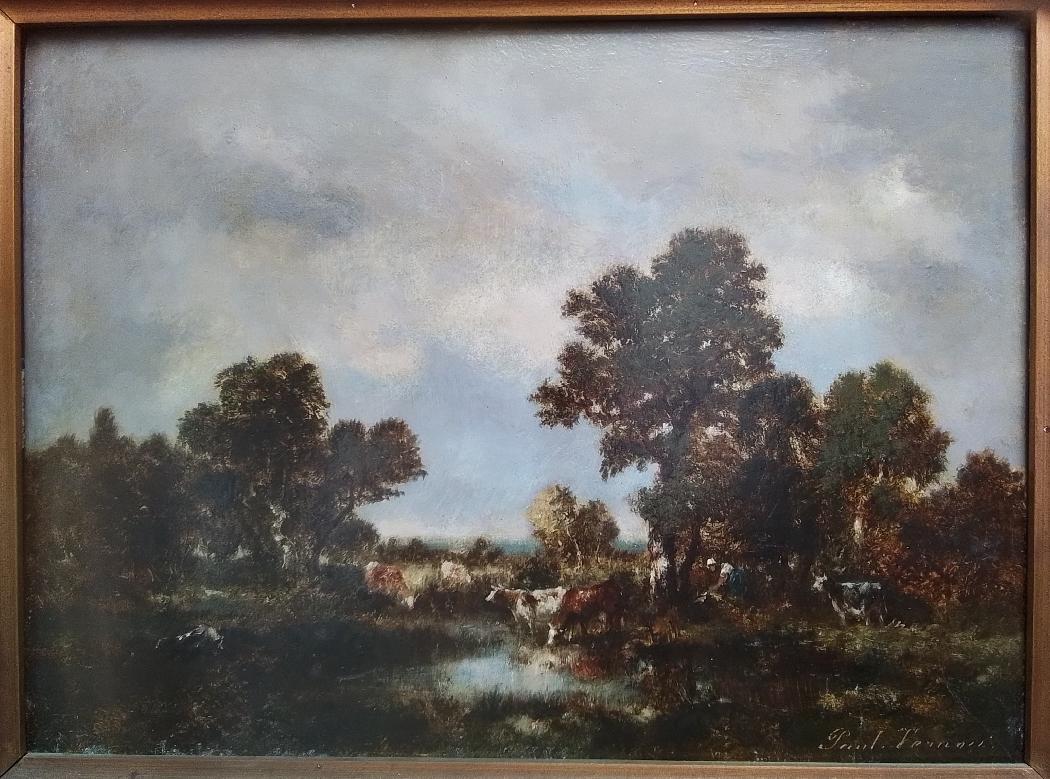
Cowherd in the Fontainebleau Forest. O/W 25 x 33 cm
Paul VERNON 1796+1875Conditions : Huile sur bois en bon état général, à noter quelques restorations anciennes au niveau des branches. Dans son cadre 20ème.
Description:
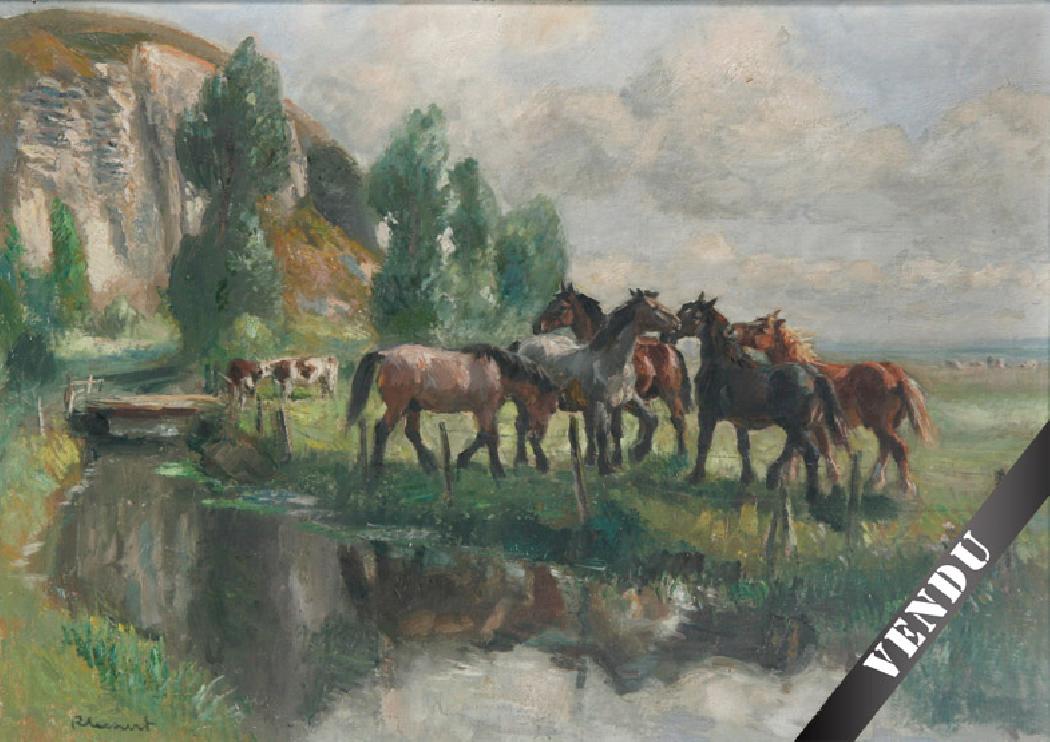
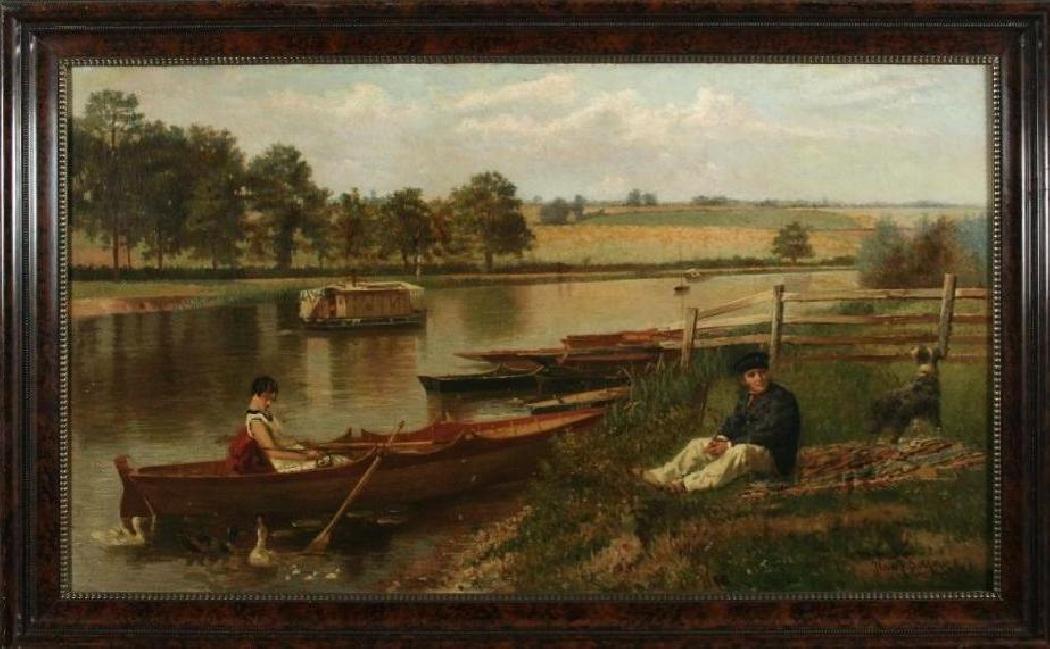
Cette œuvre présente un paysage pastoral, baigné d'une lumière douce et naturelle. Au centre, un groupe de vaches paît tranquillement près d'un ruisseau, ajoutant une dynamique paisible au tableau. Les arbres majestueux encadrent la scène, créant une profondeur captivante. Le ciel, nuancé de gris et de bleu, suggère un moment contemplatif juste avant ou après une averse. La texture des feuillages, minutieusement exécutée, témoigne d'une maîtrise technique remarquable. Les nuances de vert, marron et bleu se fondent harmonieusement, renforçant l'atmosphère sereine. Ce tableau se distingue par sa capacité à capturer l'essence d'un moment tranquille de la vie rurale, tout en laissant le spectateur entrevoir la beauté simple et intemporelle de la nature. Le contraste subtil entre la lumière et l'ombre enrichit la composition, faisant de cette œuvre un exemple parfait de l'art pastoral romantique.
| Type | Oil on panel |
|---|---|
| Signature | Signed Lower right |
| Size | 25 x 33 cm |
Price on request
Enquire about the price with the gallery. No online payment.