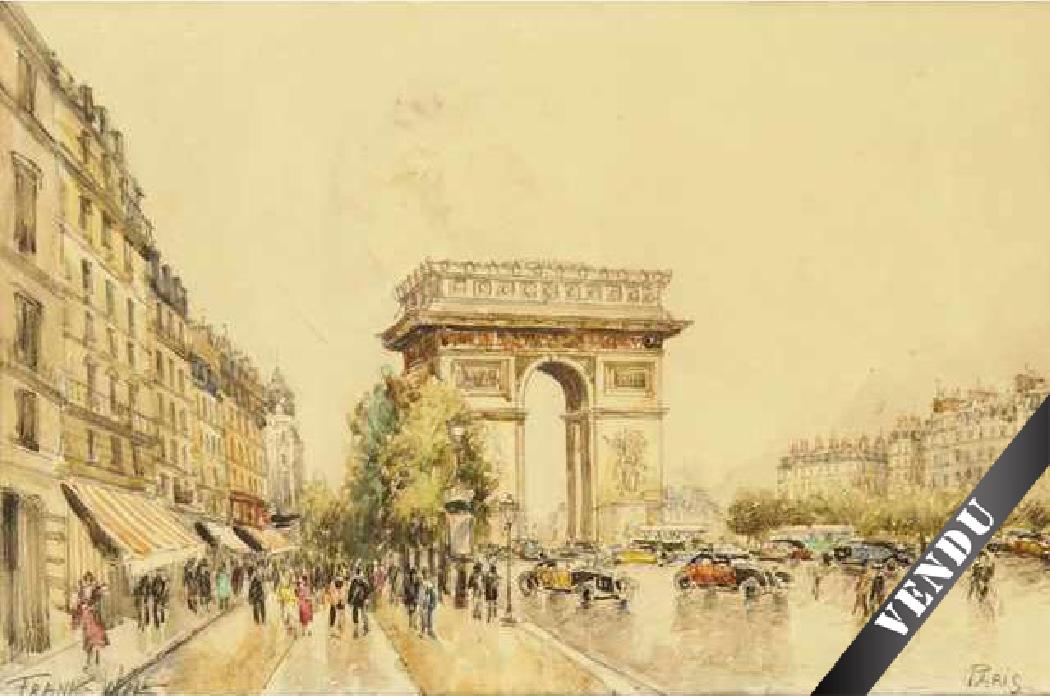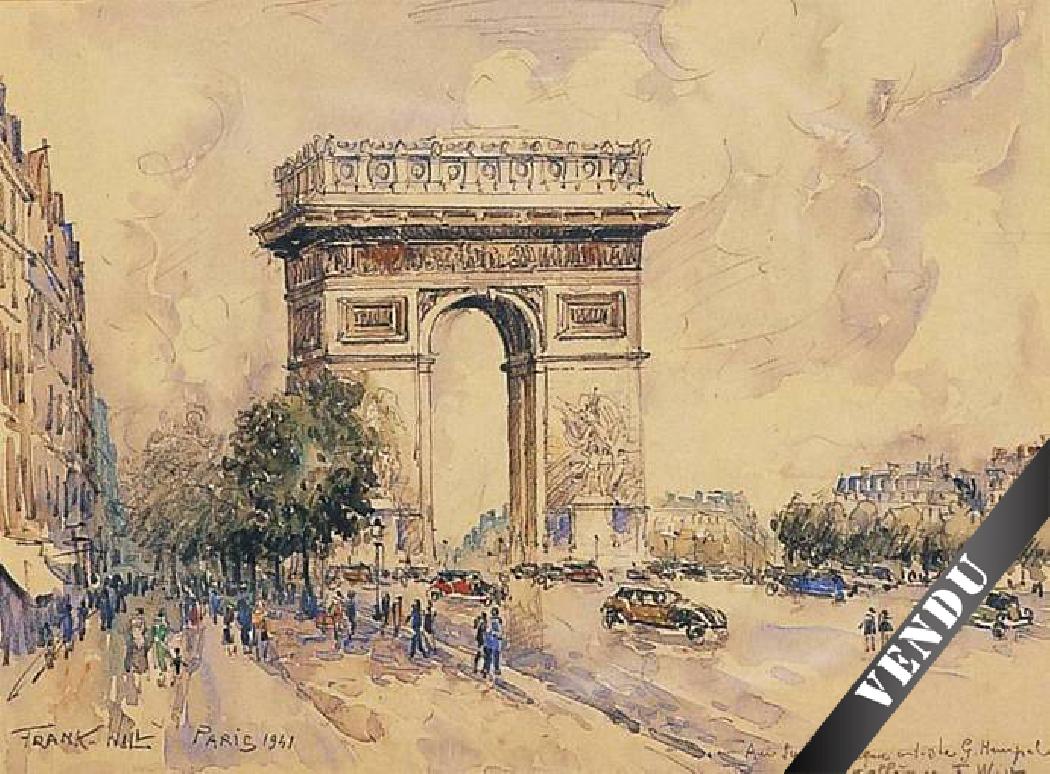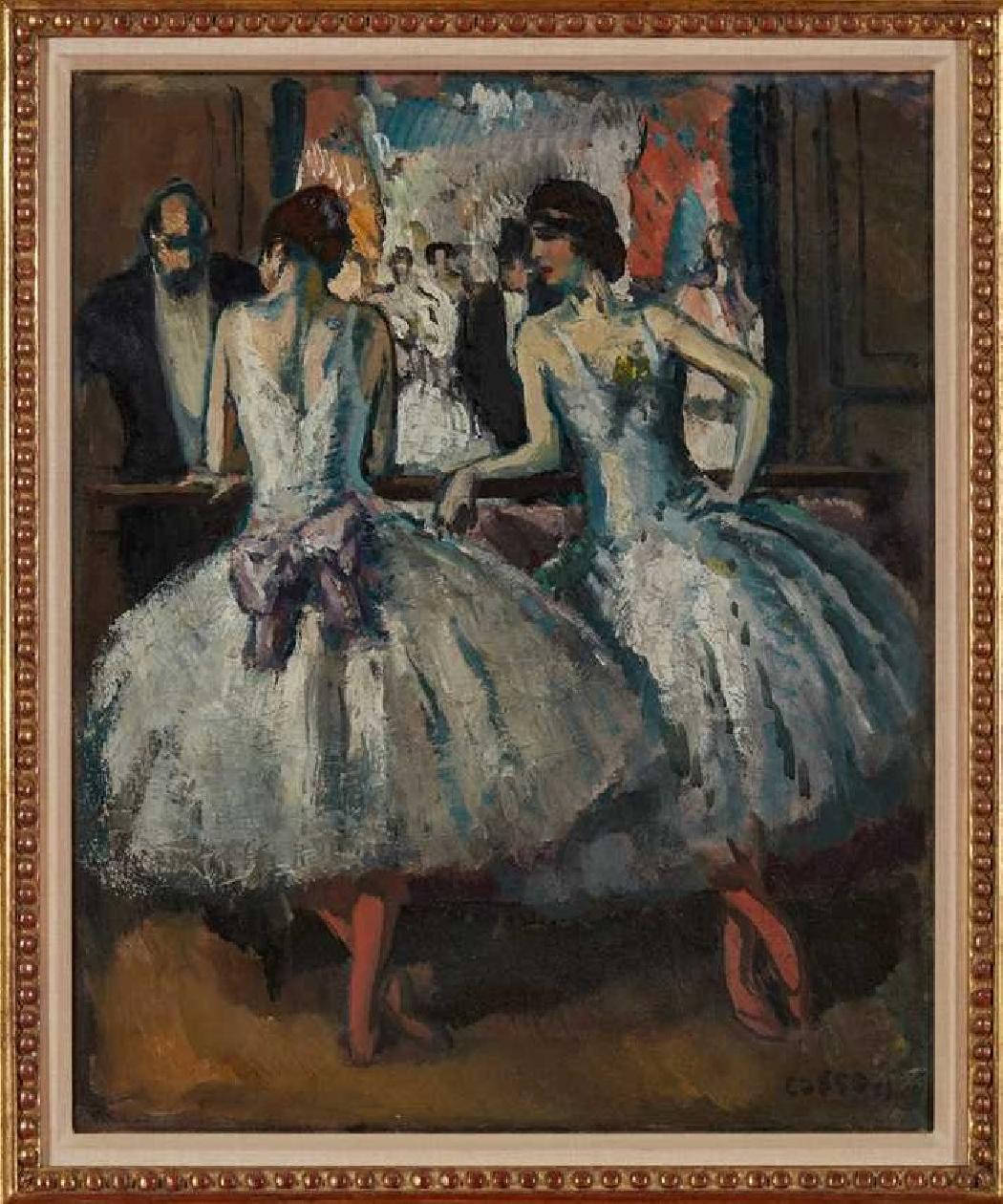
Other views
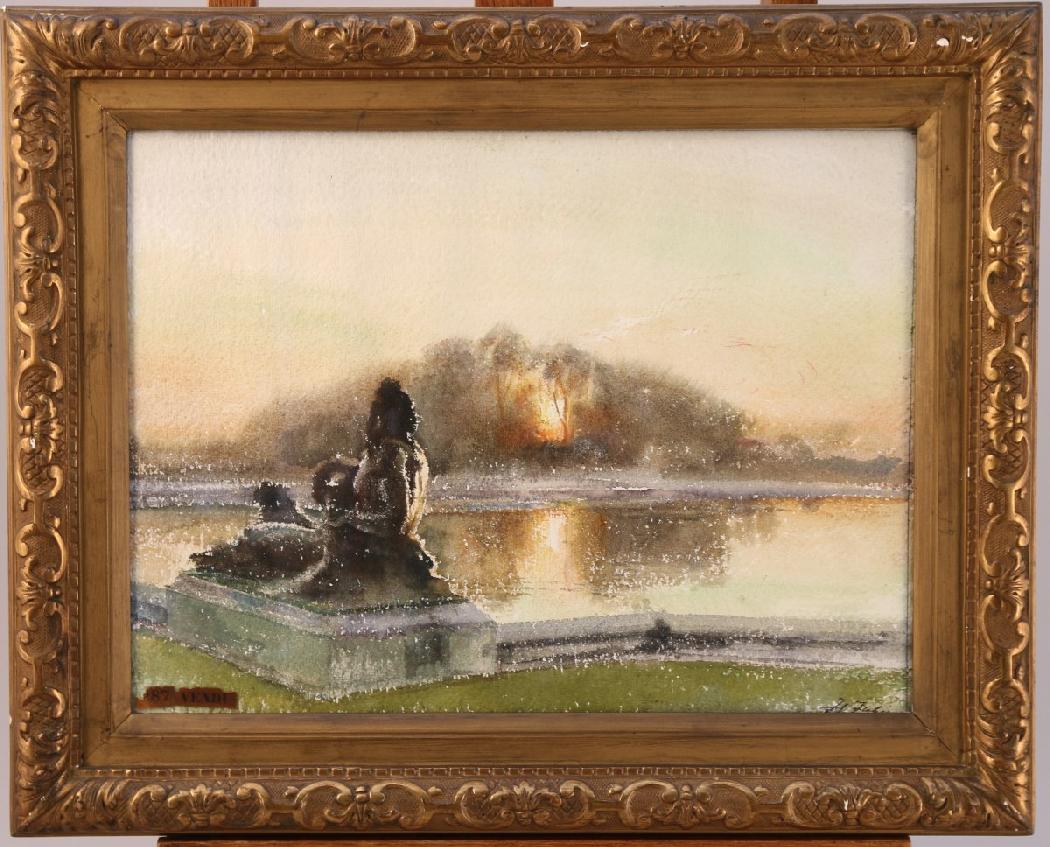
Parc of Versailles - study for ”The past" Watercolor - 24,5 x 33 cm
Henry ZUBER 1844+1909| Type | Watercolor |
|---|---|
| Signature | Signed lower right |
| Size | 24,5 x 33 cm |
Price on request
Enquire about the price with the gallery. No online payment.


Other views
| Type | Watercolor |
|---|---|
| Signature | Signed lower right |
| Size | 24,5 x 33 cm |
Price on request
Enquire about the price with the gallery. No online payment.
Artist bio
Henri Zuber born June 24, 1844 in Rixheim (Haut-Rhin) and died April 7, 1909 in Paris is a French painter and illustrator.
He cut his teeth in the Imperial Navy of Napoleon III where his talents as a draftsman and painter were revealed during his long-distance voyages. His career as a nature painter extended from 1872 to 1909. Remained outside the new trends which characterized the second half of the 19th century, a versatile painter practicing watercolor, oil, drawing and pastel with equal joy. , Henri Zuber achieved fame with his landscapes and met with great success among his contemporaries exhibiting each year at the Salon of French Artists where he received numerous awards.
Henri Zuber was born on June 24, 1844 in Rixheim in Alsace, where his grandfather, Jean Zuber, had founded a famous wallpaper factory. Henri grew up in the atmosphere of the family business, where his taste for drawing and painting was awakened.
After studying in Strasbourg then in Paris, he joined the Brest Naval School in 1861 where he met the marine painter Auguste Mayer, whose student he was from 1862 to 1863.
The naval officer Henri Zuber, Japanese bath (1866).
Appointed midshipman, he embarked on Le Montebello.
In 1864, he boarded the frigate La Thémis which escorted Emperor Maximilian of Austria to Mexico.
In January 1865, he was on board the corvette Le Primauguet which joined the naval division of the China Seas, part of the French Naval Forces of the Far East based in Saigon, whose commander in chief at that time was Admiral Governor of 'Indochina Pierre-Paul de La Grandière. During this long navigation, Zuber took notes and drawings of the landscapes he crossed: Cape Verde Islands, Cape of Good Hope where his vessel ran aground, Mauritius, Singapore then Saigon in November. It is then Hong Kong and finally Yokohama in Japan where the Primauguet joins the French squadron awaiting it.
On June 8, 1866, Le Primauguet received the order to set sail for Shanghai, where, under the orders of Rear Admiral Pierre-Gustave Roze, a French expedition against Korea was being prepared which would take place in two stages, from September 12 to November 12. Through his training, the young ensign Zuber participated in the hydrographic survey of the coasts of Kanghwa Island and the Han River, carried out the survey of the anchorage plan of Wooded Island, and produced the first western map of Korea. after local documents1.
Then he returns to France via Java, Sydney, and New Caledonia.
He illustrates his logbook with numerous sketches, sketches and caricatures.
During this long campaign, Zuber produced numerous watercolors, particularly in China and Japan.
The painter Entrance to the port of Genoa (1876), Strasbourg Museum of Modern and Contemporary Art.
The Herd of Vieux-Ferrette (1884), Strasbourg Museum of Modern and Contemporary Art.
The Past, Versailles (1898), Amiens, Musée de Picardie.
Returning to France in 1868, he resigned from the Navy and entered the studio of the painter Charles Gleyre, definitively embracing the career of painter and, incidentally, that of illustrator. He was admitted to the Salon of French Artists in 1869.
In 1870-1871, Zuber, mobilized during the war against Prussia, participated in the defense of Paris and the fighting on Mont Valérien. He was demobilized in March 1871 and, Alsace having become German, opted for France and settled in Paris. He married Madeleine Oppermann, traveled a lot and painted. He set up his workshop on rue de Vaugirard in Paris in 1872. From this date, in addition to his travels, he made numerous excursions around Paris, and painted a lot in Paris itself.
It was in 1873 that he recounted his participation in the French expedition to Korea in 1866 in the newspaper Le Tour du monde from Hachette, a periodical devoted to travel and discoveries2. Zuber is the first French author to deliver a text on the country accompanied by images taken in situ and from nature. More than the description of the military action in which he is intimately involved, he gives first place to the Korean people, so deferential, cultured and so warmly hospitable, to the literati, to the magnificent landscapes of course. Incidentally, as a good Westerner nourished by the egalitarian principles of Christianity, he harshly judges the social hierarchy which characterizes their Confucian culture and which blocks their society as in China, the real tyranny which seems to be exercised by the regent Taewon'gun and his fiercely xenophobic government to which Roze was given the mission to demand accountability. Texts and illustrations, of great finesse, were widely disseminated and inspired, not always fortunately, a number of French Far Orientalists of the time3.
In 1874, Henri Zuber was among the first shareholders of the Alsatian School in Paris. He stayed in Alsace, in the Oltingue forest and discovered the splendors of its immense forests which would influence his work.
He first worked in the oil painting technique. He made two stays in Dinard in 1875 and 1877, presented his paintings at the Salons of 1876 and 1878, but also made around thirty oil studies, around ten watercolors and a few drawings. He divides his attention between the rural landscapes of the region, of which Le Vallon de la Richardais is typical, and the coastal landscapes. He will not then return to Brittany.
He was in Cannes in 1881 when his wife died. He then had four children. Alone in the South, the painter acquired mastery of watercolors. He was noticed and appreciated by English amateurs and continued his submissions to the Salon where his work was increasingly appreciated.
In 1883, Henri Zuber remarried Hélène Risler, with whom he had three children.
He joined the Society of French Watercolorists in the early 1880s and exhibited there every year. The painter achieved great notoriety, he exhibited two large canvases Le Herd of Vieux-Ferrette and Les Premiers Sillons, acquired respectively by the Museum of Modern and Contemporary Art in Strasbourg and the Louvre Museum in Paris. For the second consecutive year in London, at Goupil & Cie, he presented 52 watercolors.
In 1884, he traveled to Holland with Camille Bernier, Edmond Yon and Émile Michel4.
In 1886, Zuber was named a knight of the Legion of Honor. An incident with the German occupiers prohibited him from staying in Alsace until 1890.
Between 1890 and 1894, he made numerous trips to London, to Mailly-le-Château with the painter Paul Lecomte, in the South, and to Beauvais for the 4 Seasons Tapestry. Henri Zuber painted a lot in Île-de-France and Paris, notably the garden of the Luxembourg Palace.
He settles in Ferrette in Alsace every summer.
In 1897, he joined the jury of the Salon des artistes français. He refuses to attend the Academy of Fine Arts. He won a gold medal at the 1889 Universal Exhibition.
From 1900 to 1904, he continued his regular stays in Ferrette. His building on rue de Vaugirard being demolished due to the construction of boulevard Raspail, he moved into rue Vavin on two floors; his workshop still exists today.
In 1906, he was promoted to the rank of officer of the Legion of Honor.
Henri Zuber died in Paris on April 7, 1909 after surgery for a stomach ulcer from which he had suffered since 1883. A major retrospective was organized in 1910 by his widow and children under the patronage of the Ministry of Fine Arts.
The work The work of Jean Henri Zuber is as varied as it is abundant. The Strasbourg Museum of Modern and Contemporary Art maintains a Zuber collection, but the painter's works are scattered in numerous museums throughout France and abroad.
Henri Zuber also produced numerous watercolors5.
Works held in public collections include, among others:
Low tide in the bay of Dinard, 1876, Mulhouse Museum of Fine Arts; Entrance to the port of Genoa, 1876, Strasbourg Museum of Modern and Contemporary Art; Marne researchers at low tide, 1876, Museum of Fine Arts of La Rochelle; Setting sun, 1878, Nancy Museum of Fine Arts; Dante and Virgil, 1878, Musée des Beaux-Arts d'Orléans; The Beech Forest, 1880, Niort, Bernard-d'Agesci museum; Hylas and the Nymphs, 1881, Brest Museum of Fine Arts; Les Premiers Sillons, 1882, Paris, Louvre Museum; Hollandsche Diep, 1885, Paris, Musée du Louvre; The Herd of Vieux-Ferrette, 1888, Strasbourg Museum of Modern and Contemporary Art; Evening Mists, 1890, Royal Museum of Fine Arts Antwerp; Bendorf Pasture, 1891, Strasbourg Museum of Modern and Contemporary Art; April flowering, surroundings of Artemare - Ain, 1893, Museum of Art and Industry of Saint-Étienne; The Past, Versailles, 1898, Amiens, Musée de Picardie; The Pink Marble Steps, 1898, Bordeaux Museum of Fine Arts.Henri Zuber born June 24, 1844 in Rixheim (Haut-Rhin) and died April 7, 1909 in Paris is a French painter and illustrator.
He cut his teeth in the Imperial Navy of Napoleon III where his talents as a draftsman and painter were revealed during his long-distance voyages. His career as a nature painter extended from 1872 to 1909. Remained outside the new trends which characterized the second half of the 19th century, a versatile painter practicing watercolor, oil, drawing and pastel with equal joy. , Henri Zuber achieved fame with his landscapes and met with great success among his contemporaries exhibiting each year at the Salon of French Artists where he received numerous awards.
Henri Zuber was born on June 24, 1844 in Rixheim in Alsace, where his grandfather, Jean Zuber, had founded a famous wallpaper factory. Henri grew up in the atmosphere of the family business, where his taste for drawing and painting was awakened.
After studying in Strasbourg then in Paris, he joined the Brest Naval School in 1861 where he met the marine painter Auguste Mayer, whose student he was from 1862 to 1863.
The naval officer Henri Zuber, Japanese bath (1866).
Appointed midshipman, he embarked on Le Montebello.
In 1864, he boarded the frigate La Thémis which escorted Emperor Maximilian of Austria to Mexico.
In January 1865, he was on board the corvette Le Primauguet which joined the naval division of the China Seas, part of the French Naval Forces of the Far East based in Saigon, whose commander in chief at that time was Admiral Governor of 'Indochina Pierre-Paul de La Grandière. During this long navigation, Zuber took notes and drawings of the landscapes he crossed: Cape Verde Islands, Cape of Good Hope where his vessel ran aground, Mauritius, Singapore then Saigon in November. It is then Hong Kong and finally Yokohama in Japan where the Primauguet joins the French squadron awaiting it.
On June 8, 1866, Le Primauguet received the order to set sail for Shanghai, where, under the orders of Rear Admiral Pierre-Gustave Roze, a French expedition against Korea was being prepared which would take place in two stages, from September 12 to November 12. Through his training, the young ensign Zuber participated in the hydrographic survey of the coasts of Kanghwa Island and the Han River, carried out the survey of the anchorage plan of Wooded Island, and produced the first western map of Korea. after local documents1.
Then he returns to France via Java, Sydney, and New Caledonia.
He illustrates his logbook with numerous sketches, sketches and caricatures.
During this long campaign, Zuber produced numerous watercolors, particularly in China and Japan.
The painter Entrance to the port of Genoa (1876), Strasbourg Museum of Modern and Contemporary Art.
The Herd of Vieux-Ferrette (1884), Strasbourg Museum of Modern and Contemporary Art.
The Past, Versailles (1898), Amiens, Musée de Picardie.
Returning to France in 1868, he resigned from the Navy and entered the studio of the painter Charles Gleyre, definitively embracing the career of painter and, incidentally, that of illustrator. He was admitted to the Salon of French Artists in 1869.
In 1870-1871, Zuber, mobilized during the war against Prussia, participated in the defense of Paris and the fighting on Mont Valérien. He was demobilized in March 1871 and, Alsace having become German, opted for France and settled in Paris. He married Madeleine Oppermann, traveled a lot and painted. He set up his workshop on rue de Vaugirard in Paris in 1872. From this date, in addition to his travels, he made numerous excursions around Paris, and painted a lot in Paris itself.
It was in 1873 that he recounted his participation in the French expedition to Korea in 1866 in the newspaper Le Tour du monde from Hachette, a periodical devoted to travel and discoveries2. Zuber is the first French author to deliver a text on the country accompanied by images taken in situ and from nature. More than the description of the military action in which he is intimately involved, he gives first place to the Korean people, so deferential, cultured and so warmly hospitable, to the literati, to the magnificent landscapes of course. Incidentally, as a good Westerner nourished by the egalitarian principles of Christianity, he harshly judges the social hierarchy which characterizes their Confucian culture and which blocks their society as in China, the real tyranny which seems to be exercised by the regent Taewon'gun and his fiercely xenophobic government to which Roze was given the mission to demand accountability. Texts and illustrations, of great finesse, were widely disseminated and inspired, not always fortunately, a number of French Far Orientalists of the time3.
In 1874, Henri Zuber was among the first shareholders of the Alsatian School in Paris. He stayed in Alsace, in the Oltingue forest and discovered the splendors of its immense forests which would influence his work.
He first worked in the oil painting technique. He made two stays in Dinard in 1875 and 1877, presented his paintings at the Salons of 1876 and 1878, but also made around thirty oil studies, around ten watercolors and a few drawings. He divides his attention between the rural landscapes of the region, of which Le Vallon de la Richardais is typical, and the coastal landscapes. He will not then return to Brittany.
He was in Cannes in 1881 when his wife died. He then had four children. Alone in the South, the painter acquired mastery of watercolors. He was noticed and appreciated by English amateurs and continued his submissions to the Salon where his work was increasingly appreciated.
In 1883, Henri Zuber remarried Hélène Risler, with whom he had three children.
He joined the Society of French Watercolorists in the early 1880s and exhibited there every year. The painter achieved great notoriety, he exhibited two large canvases Le Herd of Vieux-Ferrette and Les Premiers Sillons, acquired respectively by the Museum of Modern and Contemporary Art in Strasbourg and the Louvre Museum in Paris. For the second consecutive year in London, at Goupil & Cie, he presented 52 watercolors.
In 1884, he traveled to Holland with Camille Bernier, Edmond Yon and Émile Michel4.
In 1886, Zuber was named a knight of the Legion of Honor. An incident with the German occupiers prohibited him from staying in Alsace until 1890.
Between 1890 and 1894, he made numerous trips to London, to Mailly-le-Château with the painter Paul Lecomte, in the South, and to Beauvais for the 4 Seasons Tapestry. Henri Zuber painted a lot in Île-de-France and Paris, notably the garden of the Luxembourg Palace.
He settles in Ferrette in Alsace every summer.
In 1897, he joined the jury of the Salon des artistes français. He refuses to attend the Academy of Fine Arts. He won a gold medal at the 1889 Universal Exhibition.
From 1900 to 1904, he continued his regular stays in Ferrette. His building on rue de Vaugirard being demolished due to the construction of boulevard Raspail, he moved into rue Vavin on two floors; his workshop still exists today.
In 1906, he was promoted to the rank of officer of the Legion of Honor.
Henri Zuber died in Paris on April 7, 1909 after surgery for a stomach ulcer from which he had suffered since 1883. A major retrospective was organized in 1910 by his widow and children under the patronage of the Ministry of Fine Arts.
The work The work of Jean Henri Zuber is as varied as it is abundant. The Strasbourg Museum of Modern and Contemporary Art maintains a Zuber collection, but the painter's works are scattered in numerous museums throughout France and abroad.
Henri Zuber also produced numerous watercolors5.
Works held in public collections include, among others:
Low tide in the bay of Dinard, 1876, Mulhouse Museum of Fine Arts; Entrance to the port of Genoa, 1876, Strasbourg Museum of Modern and Contemporary Art; Marne researchers at low tide, 1876, Museum of Fine Arts of La Rochelle; Setting sun, 1878, Nancy Museum of Fine Arts; Dante and Virgil, 1878, Musée des Beaux-Arts d'Orléans; The Beech Forest, 1880, Niort, Bernard-d'Agesci museum; Hylas and the Nymphs, 1881, Brest Museum of Fine Arts; Les Premiers Sillons, 1882, Paris, Louvre Museum; Hollandsche Diep, 1885, Paris, Musée du Louvre; The Herd of Vieux-Ferrette, 1888, Strasbourg Museum of Modern and Contemporary Art; Evening Mists, 1890, Royal Museum of Fine Arts Antwerp; Bendorf Pasture, 1891, Strasbourg Museum of Modern and Contemporary Art; April flowering, surroundings of Artemare - Ain, 1893, Museum of Art and Industry of Saint-Étienne; The Past, Versailles, 1898, Amiens, Musée de Picardie; The Pink Marble Steps, 1898, Bordeaux Museum of Fine Arts.Henri Zuber born June 24, 1844 in Rixheim (Haut-Rhin) and died April 7, 1909 in Paris is a French painter and illustrator.
He cut his teeth in the Imperial Navy of Napoleon III where his talents as a draftsman and painter were revealed during his long-distance voyages. His career as a nature painter extended from 1872 to 1909. Remained outside the new trends which characterized the second half of the 19th century, a versatile painter practicing watercolor, oil, drawing and pastel with equal joy. , Henri Zuber achieved fame with his landscapes and met with great success among his contemporaries exhibiting each year at the Salon of French Artists where he received numerous awards.
Henri Zuber was born on June 24, 1844 in Rixheim in Alsace, where his grandfather, Jean Zuber, had founded a famous wallpaper factory. Henri grew up in the atmosphere of the family business, where his taste for drawing and painting was awakened.
After studying in Strasbourg then in Paris, he joined the Brest Naval School in 1861 where he met the marine painter Auguste Mayer, whose student he was from 1862 to 1863.
The naval officer Henri Zuber, Japanese bath (1866).
Appointed midshipman, he embarked on Le Montebello.
In 1864, he boarded the frigate La Thémis which escorted Emperor Maximilian of Austria to Mexico.
In January 1865, he was on board the corvette Le Primauguet which joined the naval division of the China Seas, part of the French Naval Forces of the Far East based in Saigon, whose commander in chief at that time was Admiral Governor of 'Indochina Pierre-Paul de La Grandière. During this long navigation, Zuber took notes and drawings of the landscapes he crossed: Cape Verde Islands, Cape of Good Hope where his vessel ran aground, Mauritius, Singapore then Saigon in November. It is then Hong Kong and finally Yokohama in Japan where the Primauguet joins the French squadron awaiting it.
On June 8, 1866, Le Primauguet received the order to set sail for Shanghai, where, under the orders of Rear Admiral Pierre-Gustave Roze, a French expedition against Korea was being prepared which would take place in two stages, from September 12 to November 12. Through his training, the young ensign Zuber participated in the hydrographic survey of the coasts of Kanghwa Island and the Han River, carried out the survey of the anchorage plan of Wooded Island, and produced the first western map of Korea. after local documents1.
Then he returns to France via Java, Sydney, and New Caledonia.
He illustrates his logbook with numerous sketches, sketches and caricatures.
During this long campaign, Zuber produced numerous watercolors, particularly in China and Japan.
The painter Entrance to the port of Genoa (1876), Strasbourg Museum of Modern and Contemporary Art.
The Herd of Vieux-Ferrette (1884), Strasbourg Museum of Modern and Contemporary Art.
The Past, Versailles (1898), Amiens, Musée de Picardie.
Returning to France in 1868, he resigned from the Navy and entered the studio of the painter Charles Gleyre, definitively embracing the career of painter and, incidentally, that of illustrator. He was admitted to the Salon of French Artists in 1869.
In 1870-1871, Zuber, mobilized during the war against Prussia, participated in the defense of Paris and the fighting on Mont Valérien. He was demobilized in March 1871 and, Alsace having become German, opted for France and settled in Paris. He married Madeleine Oppermann, traveled a lot and painted. He set up his workshop on rue de Vaugirard in Paris in 1872. From this date, in addition to his travels, he made numerous excursions around Paris, and painted a lot in Paris itself.
It was in 1873 that he recounted his participation in the French expedition to Korea in 1866 in the newspaper Le Tour du monde from Hachette, a periodical devoted to travel and discoveries2. Zuber is the first French author to deliver a text on the country accompanied by images taken in situ and from nature. More than the description of the military action in which he is intimately involved, he gives first place to the Korean people, so deferential, cultured and so warmly hospitable, to the literati, to the magnificent landscapes of course. Incidentally, as a good Westerner nourished by the egalitarian principles of Christianity, he harshly judges the social hierarchy which characterizes their Confucian culture and which blocks their society as in China, the real tyranny which seems to be exercised by the regent Taewon'gun and his fiercely xenophobic government to which Roze was given the mission to demand accountability. Texts and illustrations, of great finesse, were widely disseminated and inspired, not always fortunately, a number of French Far Orientalists of the time3.
In 1874, Henri Zuber was among the first shareholders of the Alsatian School in Paris. He stayed in Alsace, in the Oltingue forest and discovered the splendors of its immense forests which would influence his work.
He first worked in the oil painting technique. He made two stays in Dinard in 1875 and 1877, presented his paintings at the Salons of 1876 and 1878, but also made around thirty oil studies, around ten watercolors and a few drawings. He divides his attention between the rural landscapes of the region, of which Le Vallon de la Richardais is typical, and the coastal landscapes. He will not then return to Brittany.
He was in Cannes in 1881 when his wife died. He then had four children. Alone in the South, the painter acquired mastery of watercolors. He was noticed and appreciated by English amateurs and continued his submissions to the Salon where his work was increasingly appreciated.
In 1883, Henri Zuber remarried Hélène Risler, with whom he had three children.
He joined the Society of French Watercolorists in the early 1880s and exhibited there every year. The painter achieved great notoriety, he exhibited two large canvases Le Herd of Vieux-Ferrette and Les Premiers Sillons, acquired respectively by the Museum of Modern and Contemporary Art in Strasbourg and the Louvre Museum in Paris. For the second consecutive year in London, at Goupil & Cie, he presented 52 watercolors.
In 1884, he traveled to Holland with Camille Bernier, Edmond Yon and Émile Michel4.
In 1886, Zuber was named a knight of the Legion of Honor. An incident with the German occupiers prohibited him from staying in Alsace until 1890.
Between 1890 and 1894, he made numerous trips to London, to Mailly-le-Château with the painter Paul Lecomte, in the South, and to Beauvais for the 4 Seasons Tapestry. Henri Zuber painted a lot in Île-de-France and Paris, notably the garden of the Luxembourg Palace.
He settles in Ferrette in Alsace every summer.
In 1897, he joined the jury of the Salon des artistes français. He refuses to attend the Academy of Fine Arts. He won a gold medal at the 1889 Universal Exhibition.
From 1900 to 1904, he continued his regular stays in Ferrette. His building on rue de Vaugirard being demolished due to the construction of boulevard Raspail, he moved into rue Vavin on two floors; his workshop still exists today.
In 1906, he was promoted to the rank of officer of the Legion of Honor.
Henri Zuber died in Paris on April 7, 1909 after surgery for a stomach ulcer from which he had suffered since 1883. A major retrospective was organized in 1910 by his widow and children under the patronage of the Ministry of Fine Arts.
The work The work of Jean Henri Zuber is as varied as it is abundant. The Strasbourg Museum of Modern and Contemporary Art maintains a Zuber collection, but the painter's works are scattered in numerous museums throughout France and abroad.
Henri Zuber also produced numerous watercolors5.
Works held in public collections include, among others:
Low tide in the bay of Dinard, 1876, Mulhouse Museum of Fine Arts; Entrance to the port of Genoa, 1876, Strasbourg Museum of Modern and Contemporary Art; Marne researchers at low tide, 1876, Museum of Fine Arts of La Rochelle; Setting sun, 1878, Nancy Museum of Fine Arts; Dante and Virgil, 1878, Musée des Beaux-Arts d'Orléans; The Beech Forest, 1880, Niort, Bernard-d'Agesci museum; Hylas and the Nymphs, 1881, Brest Museum of Fine Arts; Les Premiers Sillons, 1882, Paris, Louvre Museum; Hollandsche Diep, 1885, Paris, Musée du Louvre; The Herd of Vieux-Ferrette, 1888, Strasbourg Museum of Modern and Contemporary Art; Evening Mists, 1890, Royal Museum of Fine Arts Antwerp; Bendorf Pasture, 1891, Strasbourg Museum of Modern and Contemporary Art; April flowering, surroundings of Artemare - Ain, 1893, Museum of Art and Industry of Saint-Étienne; The Past, Versailles, 1898, Amiens, Musée de Picardie; The Pink Marble Steps, 1898, Bordeaux Museum of Fine Arts.Henri Zuber born June 24, 1844 in Rixheim (Haut-Rhin) and died April 7, 1909 in Paris is a French painter and illustrator.
He cut his teeth in the Imperial Navy of Napoleon III where his talents as a draftsman and painter were revealed during his long-distance voyages. His career as a nature painter extended from 1872 to 1909. Remained outside the new trends which characterized the second half of the 19th century, a versatile painter practicing watercolor, oil, drawing and pastel with equal joy. , Henri Zuber achieved fame with his landscapes and met with great success among his contemporaries exhibiting each year at the Salon of French Artists where he received numerous awards.
Henri Zuber was born on June 24, 1844 in Rixheim in Alsace, where his grandfather, Jean Zuber, had founded a famous wallpaper factory. Henri grew up in the atmosphere of the family business, where his taste for drawing and painting was awakened.
After studying in Strasbourg then in Paris, he joined the Brest Naval School in 1861 where he met the marine painter Auguste Mayer, whose student he was from 1862 to 1863.
The naval officer Henri Zuber, Japanese bath (1866).
Appointed midshipman, he embarked on Le Montebello.
In 1864, he boarded the frigate La Thémis which escorted Emperor Maximilian of Austria to Mexico.
In January 1865, he was on board the corvette Le Primauguet which joined the naval division of the China Seas, part of the French Naval Forces of the Far East based in Saigon, whose commander in chief at that time was Admiral Governor of 'Indochina Pierre-Paul de La Grandière. During this long navigation, Zuber took notes and drawings of the landscapes he crossed: Cape Verde Islands, Cape of Good Hope where his vessel ran aground, Mauritius, Singapore then Saigon in November. It is then Hong Kong and finally Yokohama in Japan where the Primauguet joins the French squadron awaiting it.
On June 8, 1866, Le Primauguet received the order to set sail for Shanghai, where, under the orders of Rear Admiral Pierre-Gustave Roze, a French expedition against Korea was being prepared which would take place in two stages, from September 12 to November 12. Through his training, the young ensign Zuber participated in the hydrographic survey of the coasts of Kanghwa Island and the Han River, carried out the survey of the anchorage plan of Wooded Island, and produced the first western map of Korea. after local documents1.
Then he returns to France via Java, Sydney, and New Caledonia.
He illustrates his logbook with numerous sketches, sketches and caricatures.
During this long campaign, Zuber produced numerous watercolors, particularly in China and Japan.
The painter Entrance to the port of Genoa (1876), Strasbourg Museum of Modern and Contemporary Art.
The Herd of Vieux-Ferrette (1884), Strasbourg Museum of Modern and Contemporary Art.
The Past, Versailles (1898), Amiens, Musée de Picardie.
Returning to France in 1868, he resigned from the Navy and entered the studio of the painter Charles Gleyre, definitively embracing the career of painter and, incidentally, that of illustrator. He was admitted to the Salon of French Artists in 1869.
In 1870-1871, Zuber, mobilized during the war against Prussia, participated in the defense of Paris and the battles on Mont Valérien. He was demobilized in March 1871 and, Alsace having become German, opted for France and settled in Paris. He married Madeleine Oppermann, traveled a lot and painted. He set up his workshop on rue de Vaugirard in Paris in 1872. From this date, in addition to his travels, he made numerous excursions around Paris, and painted a lot in Paris itself.
It was in 1873 that he recounted his participation in the French expedition to Korea in 1866 in the newspaper Le Tour du monde from Hachette, a periodical devoted to travel and discoveries2. Zuber is the first French author to deliver a text on the country accompanied by images taken in situ and from nature. More than the description of the military action in which he is intimately involved, he gives first place to the Korean people, so deferential, cultured and so warmly hospitable, to the literati, to the magnificent landscapes of course. Incidentally, as a good Westerner nourished by the egalitarian principles of Christianity, he harshly judges the social hierarchy which characterizes their Confucian culture and which blocks their society as in China, the real tyranny which seems to be exercised by the regent Taewon'gun and his fiercely xenophobic government to which Roze was given the mission to demand accountability. Texts and illustrations, of great finesse, were widely disseminated and inspired, not always fortunately, a number of French Far Orientalists of the time3.
In 1874, Henri Zuber was among the first shareholders of the Alsatian School in Paris. He stayed in Alsace, in the Oltingue forest and discovered the splendors of its immense forests which would influence his work.
He first worked in the oil painting technique. He made two stays in Dinard in 1875 and 1877, presented his paintings at the Salons of 1876 and 1878, but also made around thirty oil studies, around ten watercolors and a few drawings. He divides his attention between the rural landscapes of the region, of which Le Vallon de la Richardais is typical, and the coastal landscapes. He will not then return to Brittany.
He was in Cannes in 1881 when his wife died. He then had four children. Alone in the South, the painter acquired mastery of watercolors. He was noticed and appreciated by English amateurs and continued his submissions to the Salon where his work was increasingly appreciated.
In 1883, Henri Zuber remarried Hélène Risler, with whom he had three children.
He joined the Society of French Watercolorists in the early 1880s and exhibited there every year. The painter achieved great notoriety, he exhibited two large canvases Le Herd of Vieux-Ferrette and Les Premiers Sillons, acquired respectively by the Museum of Modern and Contemporary Art in Strasbourg and the Louvre Museum in Paris. For the second consecutive year in London, at Goupil & Cie, he presented 52 watercolors.
In 1884, he traveled to Holland with Camille Bernier, Edmond Yon and Émile Michel4.
In 1886, Zuber was named a knight of the Legion of Honor. An incident with the German occupiers prohibited him from staying in Alsace until 1890.
Between 1890 and 1894, he made numerous trips to London, to Mailly-le-Château with the painter Paul Lecomte, in the South, and to Beauvais for the 4 Seasons Tapestry. Henri Zuber painted a lot in Île-de-France and Paris, notably the garden of the Luxembourg Palace.
He settles in Ferrette in Alsace every summer.
In 1897, he joined the jury of the Salon des artistes français. He refuses to attend the Academy of Fine Arts. He won a gold medal at the 1889 Universal Exhibition.
From 1900 to 1904, he continued his regular stays in Ferrette. His building on rue de Vaugirard being demolished due to the construction of boulevard Raspail, he moved into rue Vavin on two floors; his workshop still exists today.
In 1906, he was promoted to the rank of officer of the Legion of Honor.
Henri Zuber died in Paris on April 7, 1909 after surgery for a stomach ulcer from which he had suffered since 1883. A major retrospective was organized in 1910 by his widow and children under the patronage of the Ministry of Fine Arts.
The work The work of Jean Henri Zuber is as varied as it is abundant. The Strasbourg Museum of Modern and Contemporary Art maintains a Zuber collection, but the painter's works are scattered in numerous museums throughout France and abroad.
Henri Zuber also produced numerous watercolors5.
Works held in public collections include, among others:
Low tide in the bay of Dinard, 1876, Mulhouse Museum of Fine Arts; Entrance to the port of Genoa, 1876, Strasbourg Museum of Modern and Contemporary Art; Marne researchers at low tide, 1876, Museum of Fine Arts of La Rochelle; Setting sun, 1878, Nancy Museum of Fine Arts; Dante and Virgil, 1878, Musée des Beaux-Arts d'Orléans; The Beech Forest, 1880, Niort, Bernard-d'Agesci museum; Hylas and the Nymphs, 1881, Brest Museum of Fine Arts; Les Premiers Sillons, 1882, Paris, Louvre Museum; Hollandsche Diep, 1885, Paris, Musée du Louvre; The Herd of Vieux-Ferrette, 1888, Strasbourg Museum of Modern and Contemporary Art; Evening Mists, 1890, Royal Museum of Fine Arts Antwerp; Bendorf Pasture, 1891, Strasbourg Museum of Modern and Contemporary Art; April flowering, surroundings of Artemare - Ain, 1893, Museum of Art and Industry of Saint-Étienne; The Past, Versailles, 1898, Amiens, Musée de Picardie; The Pink Marble Steps, 1898, Bordeaux Museum of Fine Arts.
Rooms
Customize