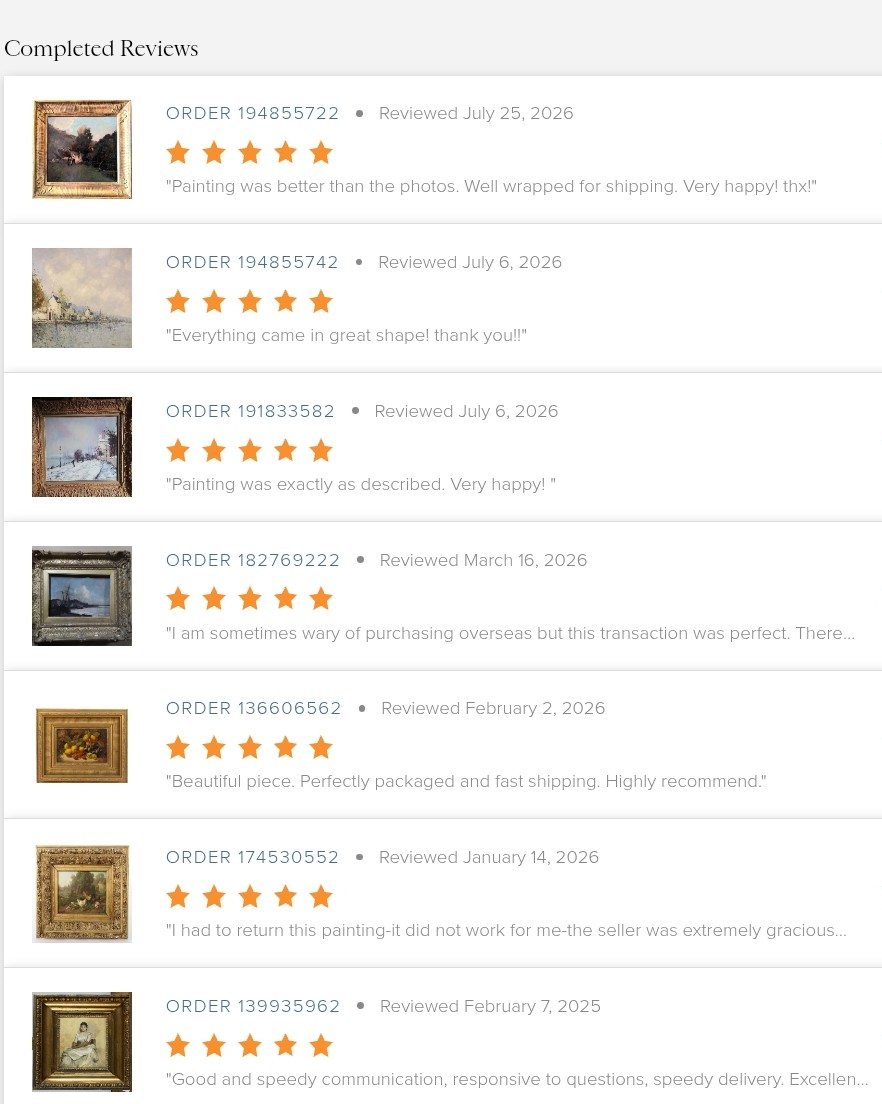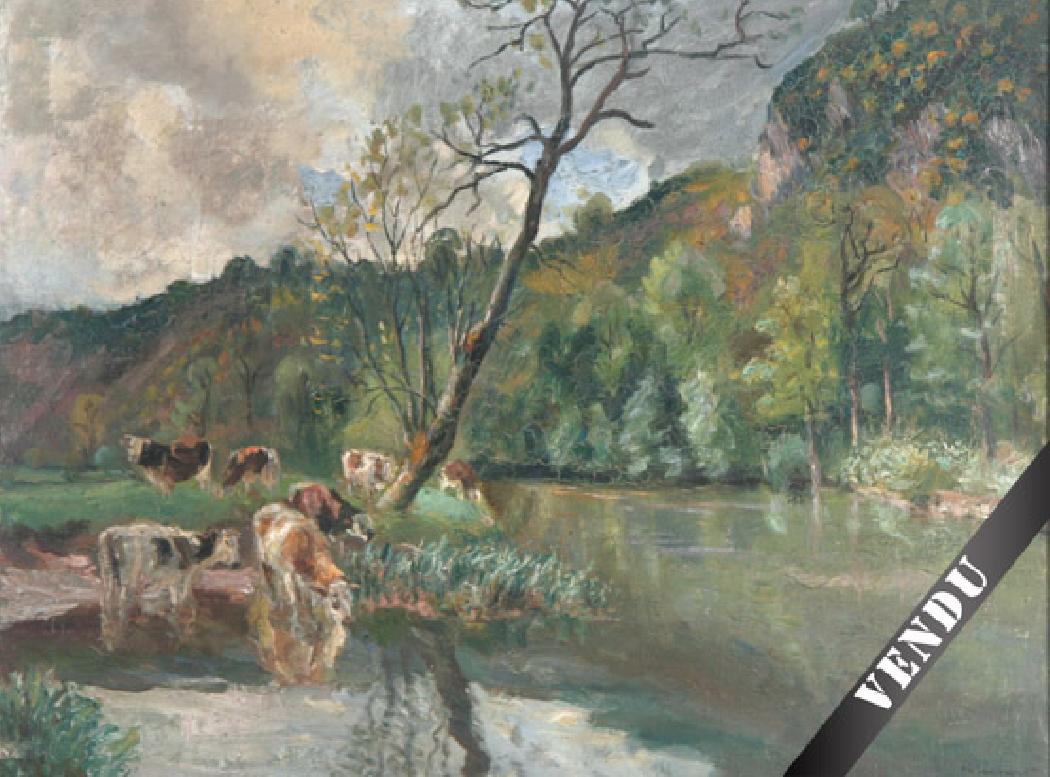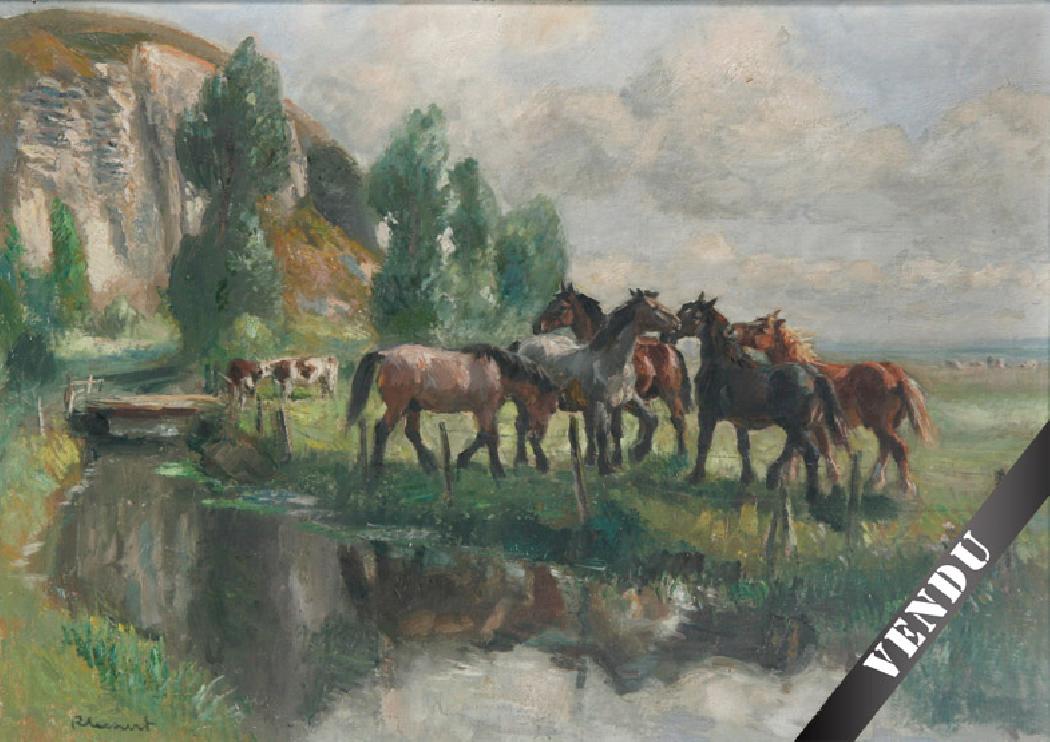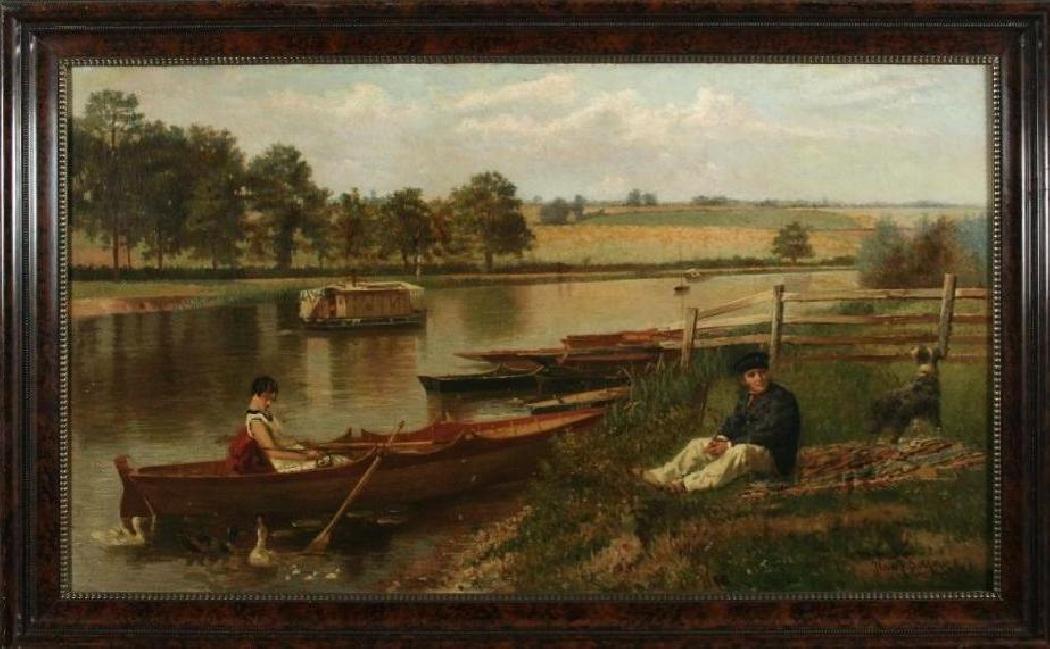
Other views
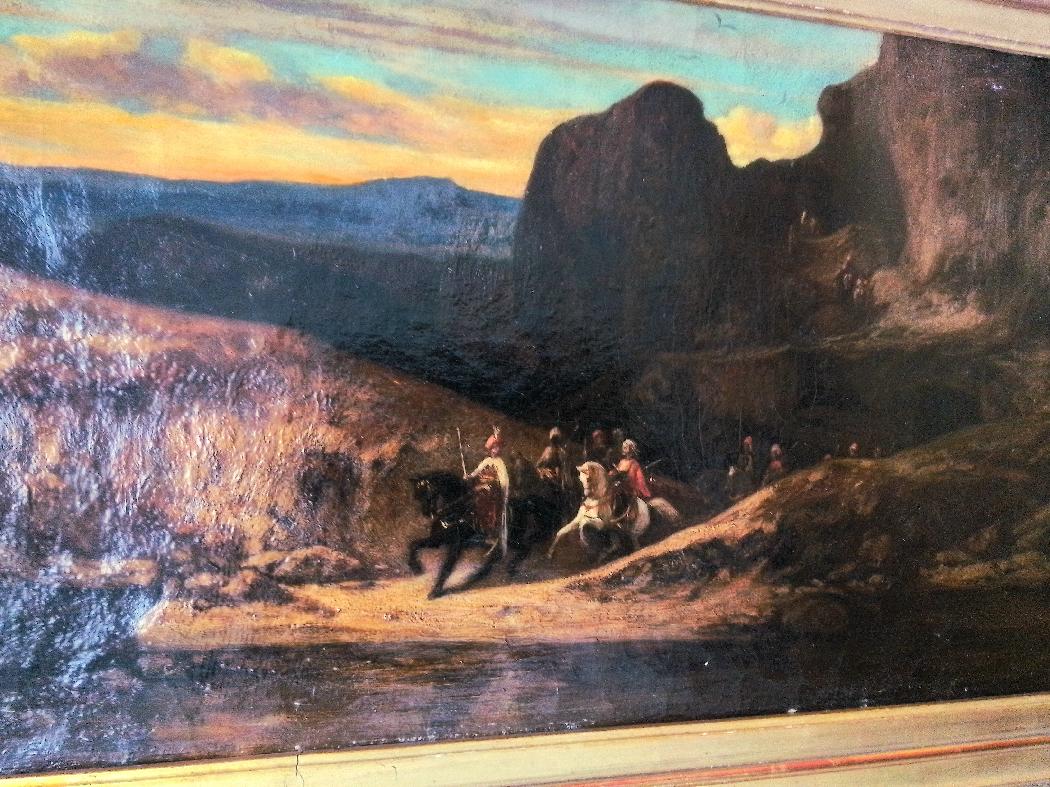
Rocky landscape with orientalist troups. O/C 28 x 48 cm
Gabriel Alexandre DECAMPS 1803-1860| Type | Oil on canvas |
|---|---|
| Signature | Lower left signed D.C. |
| Size | 28 x 48 cm |
Price on request
Enquire about the price with the gallery. No online payment.


Other views
| Type | Oil on canvas |
|---|---|
| Signature | Lower left signed D.C. |
| Size | 28 x 48 cm |
Price on request
Enquire about the price with the gallery. No online payment.
Artist bio
Master and initiator of orientalism Decamps reveals orientalism at the Salon of 1831 and establishes himself as the essential reference The Salon of 1831 marks a turning point in the history of orientalism. For the first time, the public discovers the Orient of everyday life through sincere and plausible works from a painter's journey. Decamps' works, in particular his Turkish Patrol, his subjects and his strong contrasts of shadow and light immediately and for a long time establish him as the essential reference in orientalism. "Delicious images of a world that romanticism had glimpsed through the splendors of the Itinerary, and that Decamps' violence pushes into the heart of French painting. The Orient will henceforth be one of the beautiful obsessions of our masters" notes Henri Focillon.
Théophile Gautier compares the role of Decamps, discoverer of the Orient, to that of Jean-Jacques Rousseau, discoverer of nature: "In the nineteenth century, Mr. Decamps discovered the Orient. It can be said that before him these splendid lands, beloved of the sun, did not exist for art."
Maxime Du Camp notes the considerable influence of Decamps on painters, like a "Christopher Columbus of the Orient." This obvious influence on Delacroix's Convulsionnaires de Tangier is also evident in the work of Fromentin, Gérôme, and most orientalists.
"Despite the abundance of exotic production, Decamps' work remains, until a late period, the essential reference. At least it is the easiest and it joins in popularity that of the Thousand and One Nights. This impression is not reserved for painters," analyzes Christine Peltre. It is again the example of Decamps who, as if it were obvious, came to Le Corbusier's mind when he discovered the Orient in Constantinople.
Decamps returns the Bible to the Orient In the history of religious painting, biblical subjects have always been represented in nearby Western landscapes, Tuscan landscapes for Florentine painting, northern landscapes for Flemish and Dutch painting. With classical painting, the Italian landscape became the supreme reference, even if it was extremely stylized. The Holy Land was paradoxically dissociated from the Orient, then unknown to painters.
Strengthened by his recognition as the initiator of Orientalism, Decamps returned the Bible to the Orient. He thus managed to simultaneously pursue a dual ambition, that of the history painter whom he wanted to have recognized and that of the orientalist painter whom everyone greeted with enthusiasm. His religious subjects are painted in severe and grandiose oriental landscapes, often dazzled by light: Joseph sold by his brothers (Salon of 1839), Samson fighting the Philistines (Salon of 1839), Joshua stopping the sun, Suite of Samson (Salon of 1845), Eliezer and Rebecca (Salon of 1850-51), Saul pursuing David.
Decamps does not fall into orientalist anecdote, aware that it is not suitable for religious painting. The landscapes are plausible but stylized and powerful, the figures are reduced and relegated to the background. What matters above all is the evocation. The viewer is transported to a striking biblical Orient.
Bruno Foucart has highlighted the major role played by Decamps in the revival of religious painting. After the path of Ingres, heir to Raphael, after that of Delacroix, heir to Veronese, Decamps, heir to Rembrandt, opens a third path in religious painting, by far the most audacious and innovative of his time. "Decamps is indeed in these conditions the founding father of orientalism; from the outset, he demonstrates the relative vanity of an exoticism with an exact description, since impression is enough; from the outset, he sets the limits of a new history painting less concerned with describing than with evoking".
Decamps spiritualizes the landscape, which, stripped of the superfluity of a descriptive representation, sometimes tends towards abstraction. Only orientalist emotion and the sensation of the sacred then remain.
Passer of realism "Decamps loved life in its most familiar aspects, taking pleasure in the landscape, in animals, in the existence of the humble [...] In this last respect, he is the continuator of Géricault, the precursor of Millet."
The generations between 1830 and 1840 are filled with the efforts of artists who try to free themselves from the literary and historical influences of romanticism as well as from the academicism of the classics who also want to translate, alongside the valiant landscapers already marching from conquest to conquest, the aspects of the life of contemporary man. This concern to put art back on its true path, to make it express the aspirations and forms of life of our time, is felt even from the beginning of the century. But without going back to Delacroix, Géricault and even Gros or David, it is certain that, with Decamps and following Decamps, there is a whole world of artists strongly stirred by the movement of ideas fermenting at that time, a movement that would lead to the great democratic effervescence of 1848." analyzes Léonce Bénédite A great figure of his time Panorama on the History of the century (fragment).
Henri Gervex, 1889.
Petit Palais, Paris.
Adolphe Moreau (1800-1859), a private collector and friend of his brother, Maurice-Alexandre Decamps, compiled a systematic catalogue of the artist's work during his lifetime, including, in addition to the original plates, reproductions of all kinds and processes: paintings, watercolours, pencil and charcoal drawings, twenty etchings - and the pencil style -, a hundred lithographs, and a few woodcuts. One of his contemporaries who reproduced his works in the form of lithographs, and not without success, was Eugène Prosper Leroux Although he did not always succeed in pleasing the exhibition jury, Decamps enjoyed the public's favour. His genre scenes in particular were a commercial success. He was able to establish fruitful relationships with private collectors, art lovers, and dealers attached to his work who contacted him directly, such as the English watercolourist Arrowsmith. Among his patrons was the Duke of Orléans. Most of the sketches had their recipients. His public sales were always an event that provoked the enthusiasm of his admirers. However, while he received most of the rewards and marks of recognition granted to artists, he did not obtain an official commission, with the exception of Job and his friends, which remained unfinished due to his state of health, and not delivered.
Museum list of Alexandre-Gabriel Decamps works of art Les Sonneurs (1841), Paris, musée du Louvre.
Londres, Wallace Collection : Un Janissaire, 1827, huile sur toile, 24 x 19 cm Williamstown, Clark Art Institute : Chasse aux oiseaux ou La Chasse au miroir, 1830, huile sur toile, 35 × 50 cm, Williamstown, Clark Art Institute Williamstown, Clark Art Institute : Femme turque fumant, vers 1830, aquarelle, 14,8 x 10,6 cm Paris, musée du Louvre : La Battue en plaine, vers 1830, huile sur bois, 22 x 32 cm Londres, Wallace Collection : La Patrouille turque, vers 1830-1831, huile sur toile, 115 x 179 cm Chantilly, musée Condé : Paysage turc, vers 1832, huile sur toile, 49 x 65 cm Londres, Wallace Collection : L'Abreuvoir, 1832, huile sur toile, 80 x 117 cm Londres, Wallace Collection : Personnages orientaux au repos ou Constantinople, intérieur de parc, 1832-1833, huile sur toile, 33 × 46 cm Paris, musée du Louvre : La Défaite des Cimbres, 1833, huile sur toile, 130 x 195 cm Paris, musée du Louvre : Mendiant comptant sa recette, 1833, huile sur toile, 41 x 32 cm Chantilly, musée Condé : Corps de garde turc sur la route de Smyrne à Magnésie, 1833, huile sur toile, 91 x 155 cm Paris, musée du Louvre : Le Singe peintre, dit Intérieur d'atelier, vers 1833, huile sur toile, 32 × 40 cm Londres, Wallace Collection : Personnage assis : une scène turque ou Les Anes à Boulaq, 1833, huile sur toile, 42 × 68 cm[ Washington, Phillipps Collection : Intérieur d'un café turc, dit Le Rêve turc, vers 1833, huile sur toile, 31,5 x 40,5 cm Reims, musée des Beaux-Arts : Incendie d'un village italien, vers 1834, huile sur toile, 31,2 x 38,3 Chantilly, musée Condé : Don Quichotte rencontre la belle Dulcinée, 1834, huile sur toile, 40 x 60 cm Londres, Wallace Collection : Le Supplice des crochets, vers 1835-1837, huile sur toile, 91 x 137 cm Brest, musée des Beaux-Arts : Les Danseurs albanais, vers 1835, huile sur toile, 77 × 124 cm Paris, musée du Louvre : Jésus sur le lac de Génésareth, vers 1836, huile sur toile, 40 x 74 cm Chantilly, musée Condé : Enfants jouant avec une tortue, 1836, huile sur toile, 72,5 x 91,6 cm Williamstown, Clark Art Institute : Le Chat, la belette et le petit lapin, 1836, huile sur toile, 23 x 34 cm Londres, Wallace Collection : Moïse sauvé des eaux, 1837, huile sur toile, 30 x 47 cm New York, Metropolitan Museum of Art : Les Experts, 1837, huile sur toile, 46,4 x 64,1 cm Paris, musée du Louvre : Une Rue à Smyrne, vers 1838, huile sur toile, 77 x 60 cm Londres, Wallace Collection : Joseph vendu par ses frères, 1838, huile sur toile, 30 x 41 cm Chantilly, musée Condé : Etendard turc, vers 1839, huile sur toile, 32 x 38 cm Reims, musée des Beaux-Arts : Diogène, vers 1840, huile sur toile, 23,5 x 30,9 cm Reims, musée des Beaux-Arts : Le Capucin collecteur, 1840, huile sur carton, 17,8 x 23,7 cm Reims, musée des Beaux-Arts : Souvenir de Turquie d'Asie (environs de Smyrne), huile sur toile, 31,6 x 56,2 cm Williamstown, Clark Art Institute : La Halte dans le désert, 1840, aquarelle, 21,7 x 28,8 cm Paris, musée du Louvre : Sortie de l'école turque, vers 1841, huile sur toile, 66 x 89 cm Paris, musée du Louvre : Les Sonneurs, 1841, huile sur toile, 58 x 48 cm Londres, Wallace Collection : Traversée de la rivière ou Cavalerie turque traversant un gué, vers 1841, aquarelle, 32 x 46 cm Londres, Wallace Collection : Les Sorcières de Macbeth, vers 1841, huile sur toile, 31 x 41 cm Paris, musée du Louvre : Le Valet de chiens, 1842, huile sur toile, 47 x 39 cm Williamstown, Clark Art Institute : Paysan italien, 1842, huile sur toile, 39,4 x 31,5 cm Paris, musée du Louvre : Les Remparts d'Aigues-Mortes, vers 1843, huile sur toile, 43 x 64 cm Paris, musée d'Orsay : Intérieur de ferme rustique à Fontainebleau, vers 1843, huile sur toile, 78 x 56,5 cm Paris, musée du Louvre : La Mare, 1844, huile sur bois, 16 x 13 cm Paris, musée d'Orsay : Marchand turc fumant dans sa boutique, 1844, 36 x 28 cm Chantilly, musée Condé : Vue d'Ebra en Palestine (aquarelle), vers 1844, 19 × 31 cm Londres, Wallace Collection : Gué une rivière ou Arabes traversant une rivière, 1845, aquarelle, 50 × 85 cm Chantilly, musée Condé : Cavalerie turque asiatique traversant un gué, 1845, pastel, 66 x 98 cm Paris, musée du Louvre (ancienne Collection Étienne Moreau-Nélaton : Le Passage du gué, vers 1846-1853, huile sur toile, 58,3 x 118,5 cm Paris, musée d'Orsay : Le Christ au prétoire, vers 1846, huile sur toile, 144 x 104,5 cm Chantilly, musée Condé : Souvenir de la Turquie d'Asie, dit Enfants auprès d'une fontaine, 1846, huile sur toile, 100 x 74 cm Chantilly, musée Condé : Ecole turque, 1846, huile sur toile, 32 x 41 cm Londres, Wallace Collection : Le Philosophe, 1846, huile sur toile, 22 x 28 cm Williamstown, Clark Art Institute : Vieille femme buvant, vers 1846, encre brune, 22,2 x 18 cm Chantilly, musée Condé : Bertrand et Raton, vers 1846, huile sur toile, 15 x 21 cm Paris, musée du Louvre : L'Affût, 1847, huile sur bois, 23 x 17 cm Chantilly, musée Condé : Enfant donnant à manger à un mouton, 1847, huile sur toile, 13 x 20 cm Williamstown, Clark Art Institute : Le Braconnier, vers 1847, huile sur toile, 24,1 x 18,5 cm Londres, Wallace Collection : Un puits en Orient ou Paysage de Syrie, 1847, huile sur toile, 31 × 42 cm Londres, Wallace Collection : Le mouillage de Smyrne, vers 1847, huile sur toile, 46,8 x 68 cm Chantilly, musée Condé : Marche de bachi-bouzouks, 1848, aquarelle, 21,8 x 42 cm Chantilly, musée Condé : Rebecca à la Fontaine, 1848, huile sur toile, 30 x 41 cm Paris, musée du Louvre : Le Désert indien, 1849, huile sur toile, 22 x 38 cm Paris, musée du Louvre : La Cour de ferme, 1850, huile sur toile, 32,5 x 24,5 cm Paris, musée d'Orsay : Saül poursuivant David, vers 1853, huile sur toile, 45,5 x 81,5 cm Londres, Wallace Collection : La Pêche miraculeuse, vers 1853, huile sur toile, 28 x 45 cm New York, Metropolitan Museum of Art : Le Bon samaritain, vers 1853, huile sur toile, 93 x 74 cm Dates non documentées Orléans, musée des Beaux-Arts: Le pâtissier turc, huile sur toile, 55 x 46 cm (disparu en juin 1940).
Paris, musée du Louvre : Le Rémouleur, huile sur toile, 38 x 51 cm Paris, musée du Louvre : La Caravane, huile sur toile, 60,5 x 100 cm Paris, musée du Louvre : Espagnols jouant aux cartes, huile sur toile, 47 x 62 cm Moscou, Musée Pouchkine : Jeunes mendiants, aquarelle, 36 x 47 cm Grenoble, musée de Grenoble : Ensemble de dessins et d'estampes Reims, musée des Beaux-Arts : Marine, huile sur toile, 24,3 x 35,3 cm Reims, musée des Beaux-Arts : Vue d'Orient, huile sur carton, 31,1x24,8 cm
Rooms
Customize